Digestion and Binge Eating

Digestion problems and binge eating is like the chicken or the egg…
Which came first?
Binge eating and binge eating disorder can most definitely lead to digestive discomforts and concerns. Afterall cycles of binge eating and overeating, eating rapidly, eating past the point of fullness and/ or to the point of physical illness, feeling immense stress and anxiety around food and body, and more, can all lead to major digestive disturbances and discomfort.
AND someone who has struggled with their digestion (for example IBS or food allergies or intolerances), may have been going through cycles of food restrictions and avoidances due to their digestive discomforts. This can lead to nutritional imbalances or consuming too few calories and nutrients, or feeling continually unsatisfied with their meals… all of which can also cause binges. Restriction leads to binges - always.
Regardless of which came first, the most important point here is that binge eating and digestive issues go hand in hand. Every singe individual I have ever worked with and supported through binge eating recovery has also struggled with their digestion.
It is important, therefore, that when we are addressing your nutrition and working on overcoming binge eating, that we are also working on addressing and supporting your digestion.
For many, recovering from binge eating disorder and no longer engaging in cycles of binge eating and restriction, feeling more calm and relaxed around food, and utilizing tools to support stress and anxiety, are all enough to improve one's digestion and improve overall gut health and comfort.
For others, more targeted support is needed to improve digestion while overcoming binge eating and recovering from binge eating disorder. While this is highly personalized (we are all unique and what we need to heal and feel our best will differ from person to person), I wanted to give you some simple yet impactful tips to support digestion.
3 Simple Tips for Digestive Support:
1. Work on getting yourself out of fight or flight.
This is never the thing that anyone wants to hear first, but it is honestly the most important. The gut-brain connection is real (and I wrote an entire article on it here).
Many of us are eating our meals and snacks when we are feeling stressed out, anxious, fearful and / or worried and often we are eating while engaging in activities that perpetuate these feelings. Perhaps we are eating while driving to work, or eating while working or checking emails. Maybe we are eating while watching something intense on TV or while scrolling on social media or watching the news. Or perhaps we feeling anxiety around food, as so many with eating disorders do.
When we feel these emotions, our body goes into fight or flight. Digestion shuts down, blood pumps to the extremities and we get ready to fight that “bear”. Digestion can wait for later because fighting that bear is so much more important. Right?
So here’s the thing: If you are struggling with your digestion and are looking to remove foods and add in supplements, but are still eating while reading the news, driving to work, emailing with clients, and scrolling through social media, then I am going to give you some tough love. It’s not a sexy intervention, and certainly not a popular one, but it is oh so important. If you can try taking time for your meal as often as possible away from stressors, take a few deep belly breaths and find a moment of calm to eat your food it can make such a positive impact on your body's ability to digest more comfortably. You allow your body to go into rest and digest vs fight or flight.
2. Reinoculate your gut with good bacteria.
OK- now that we have gotten that whole gut-brain connection chat out of the way, let’s talk about something that everyone is always more excited to hear about: food and supplements ;)
One of the most supportive nutritional additions we can make for our gut health, is to add in a probiotic supplement if needed (always speak to your healthcare provider to find what is best for you personally) and add in more probiotic rich foods into your diet to reinoculate your gut with good bacteria. For my personal journey in healing IBS many years ago, probiotics and probiotic rich foods made a massive impact.
Probiotic rich foods to add in:
Kefir (dairy or coconut kefir, water kefir)
Yogurt
Kombucha
Sauerkraut
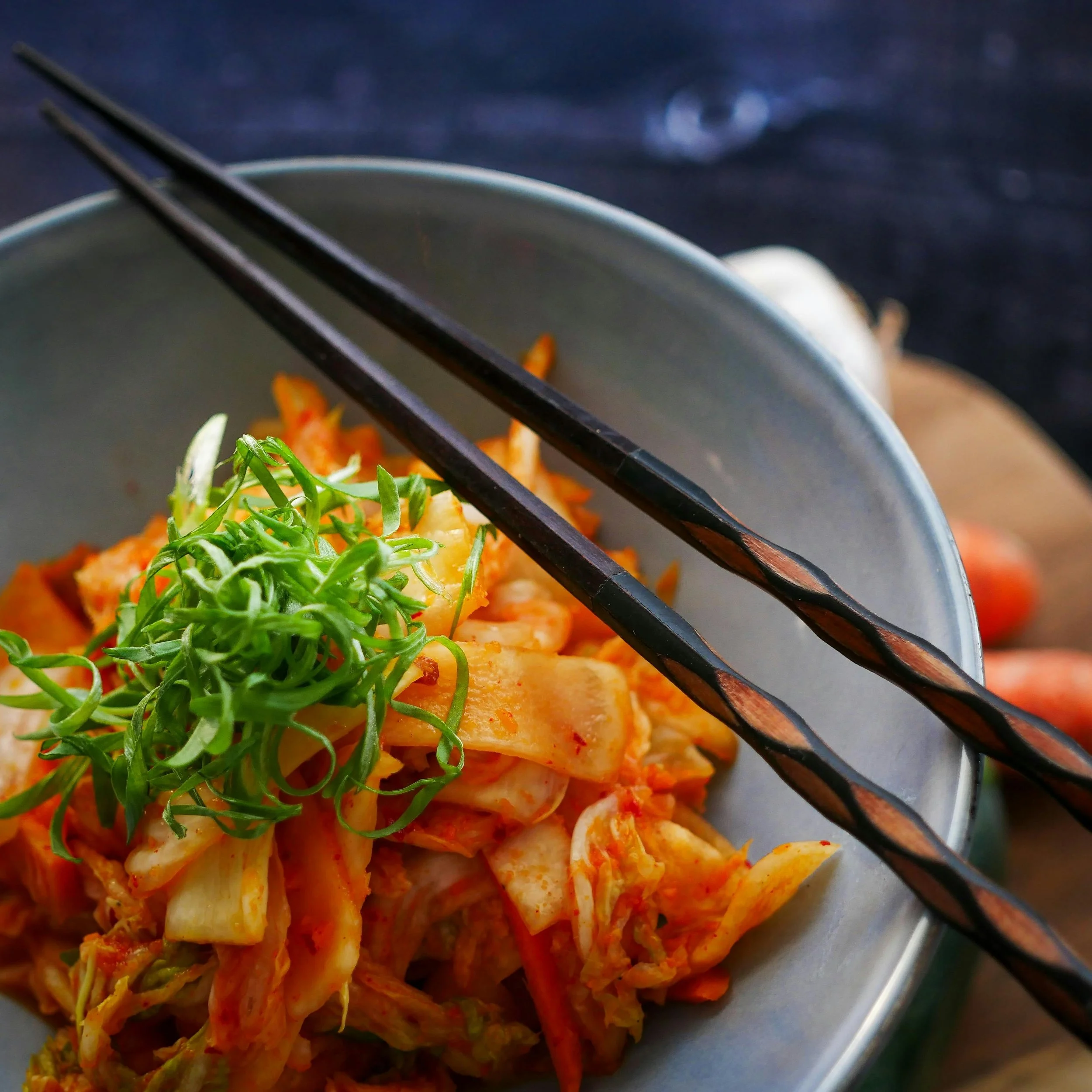
Kimchi
Apple cider vinegar
Tempeh
Miso
3. Make sure you are drinking enough water!
I love this tip for digestion because it is free, doable, and can make such a big difference to your digestion, especially if you are someone struggling with constipation. Simply put, you need enough water to move fiber. I find that so many clients I have worked with over the past 11 years, will focus on adding in more fiber rich foods to their diets or even fiber supplements recommended by their doctors, but then wonder why they are still having digestive issues. Without enough water, fiber can cause constipation. Fiber binds with water, which makes stool softer and easier to pass.
You really do need at least 2 liters of water each day..yes, 2! And yes, at least. I personally consume around 3 liters each day and that is what my body needs to feel optimally hydrated, keeping in mind I do drink coffee in the morning (which dehydrates us) and I live in a dry climate (the Rocky Mountains). I share this to point out that there is absolutely a spectrum here, and we are all unique. Listen to your body and find what you personally need to thrive.
A good trick if you are someone who struggles to remember to drink enough water each day, is to use elastic bands or hair elastics. For example, let’s say your water bottle holds half a liter of water and you are trying to get your water consumption up to 2 liters of water each day, then you would put 4 elastic bands around your water bottle. Each time you finish a bottle, you remove a band. It’s simple, but simple is often best. It can be a great visual reminder in your day.
Of course there are many other nutritional interventions to support your digestion, many possible supplements and herbs that can make a huge impact to your gut health and healing, and lifestyle interventions and mental health support. In the work with my clients, we build personalized protocols unique to each individual's health and needs. And if you are struggling with both binge eating AND digestion, it is so important that no matter what health provider(s) you see for support, that they know you are struggling with both binge eating disorder and your gut health so that you get the best and most comprehensive support possible.
I offer free discovery calls, so if you have questions about what nutritional support with me would look like, I am always happy to connect.